Group Learning in Kindy: Setting the Foundation for Lifelong Success
Group learning in kindy does more than fill a room with chatter; it shapes how your child connects, thinks, and grows. At Arden Early Learning Airlie Beach, our Queensland Government-approved kindergarten program helps children build social skills and cognitive growth through peer interaction and educator-led activities. This early childhood education approach sets the stage for smoother school transitions and stronger school readiness. Let’s explore why learning together matters for your child’s future.
Why Group Learning Matters
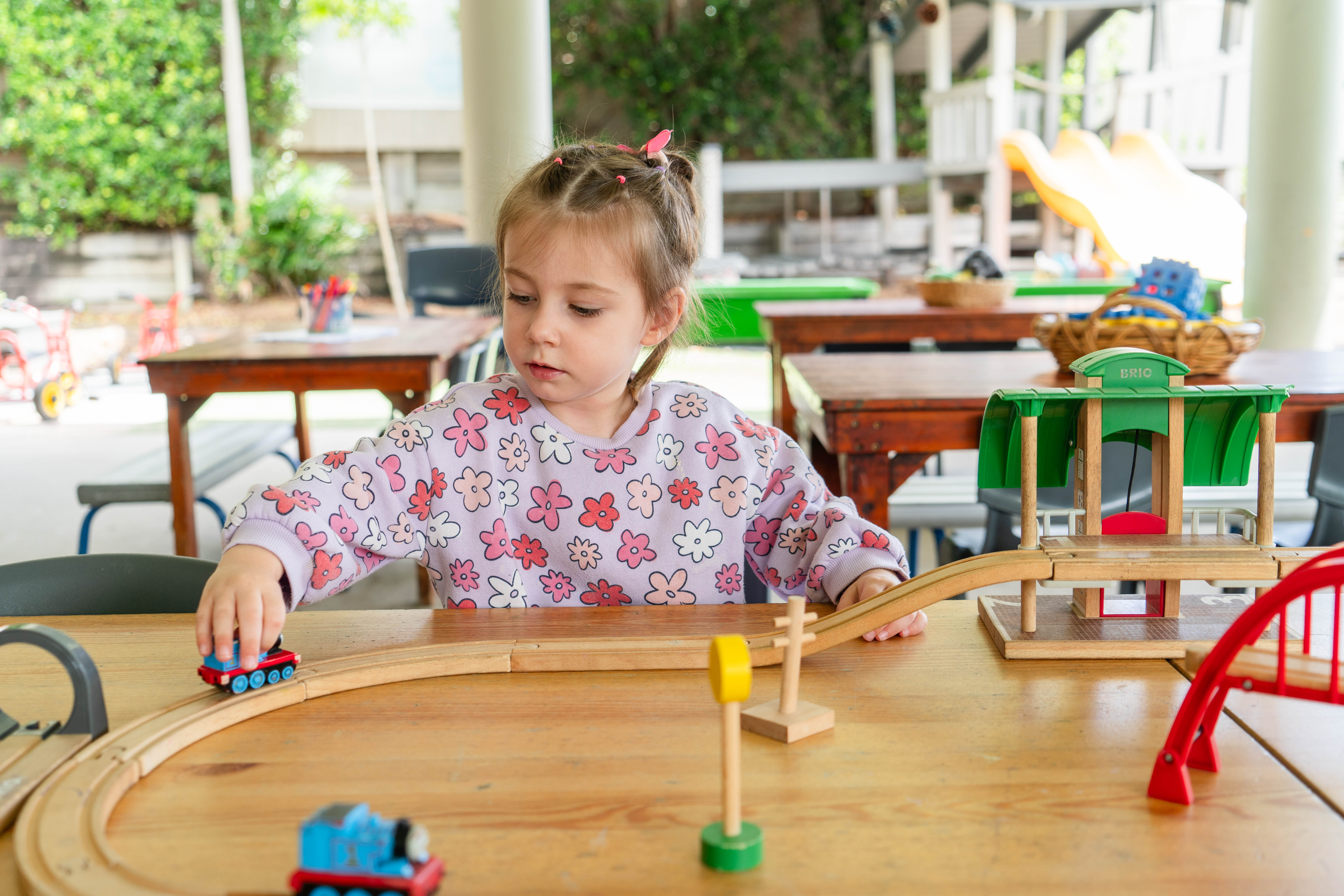
When children learn together, they gain more than just facts; they build the social foundation that supports all other learning.
Building Social and Emotional Skills
Your child’s first friendships teach lessons no book can provide. In group settings, children practice reading facial expressions, taking turns, and managing big emotions in real-time.
Children who learn in groups show remarkable growth in handling emotions. When a classmate grabs a toy, your child learns to use words instead of actions. These small moments build emotional muscles they’ll use for life. A study found that children in quality group settings show a 40% improvement in conflict resolution skills compared to those with limited peer interaction.
Developing strong social skills in early childhood sets your child up for success in school and beyond. These skills don’t just happen; they need practice with peers and guidance from caring adults. At kindy, your child gets both.
Think about it: most adults struggle with the same social skills kindy children practice daily. By supporting group learning now, you’re giving your child a head start on abilities they’ll use in every relationship they’ll ever have.
Boosting Communication and Language Abilities
Words bloom in the garden of group play. Your child’s vocabulary grows faster when they chat with friends about block towers, pretend picnics, and backyard adventures.
In group settings, children talk more. They ask questions, share ideas, and tell stories. A typical kindy child in group settings uses 1,500 more words per day than children in less social environments. This constant practice builds speaking skills and listening abilities at the same time.
Children also learn the back-and-forth rhythm of conversation through group play. They discover that communication has rules, waiting for a turn to speak, staying on topic, and checking if others understand. These patterns become second nature when practised daily with friends.
The best part? This learning feels like play, not work. When your child builds a sand castle with friends, they’re actually building language skills that will help them read, write, and connect with others for years to come.
Cognitive Growth in Kindy
The thinking skills your child develops in kindy form the foundation for all future learning. Group activities spark brain connections that individual work simply can’t match.
Encouraging Problem-Solving and Critical Thinking
Watch children figure out how to build a block tower that won’t fall, and you’ll see little engineers at work. Group problem-solving teaches skills no worksheet can match.
When faced with a challenge, two minds work better than one. Your child learns to consider different approaches when a friend suggests turning the block sideways or making the base wider. This exposure to multiple solutions teaches flexible thinking, a skill that helps in math, science, and life.
Children in groups also learn to test ideas together. “What if we try this?” becomes a natural question, laying the groundwork for scientific thinking. They make predictions, test them out, and adjust based on results, all while having fun with friends.
Most parents are surprised to learn that 90% of brain development happens before age five. Group problem-solving activities create rich neural connections during this critical window. The thinking skills your child builds today will serve them in school and beyond.
Enhancing Engagement and Motivation
Children work harder when peers are involved. The magic ingredient? It’s simple: learning with friends makes everything more fun.
Your child stays focused longer when working in a group. What might seem boring alone becomes exciting with friends. Building a puzzle might hold attention for 5 minutes solo, but stretches to 15 minutes when done with classmates. This extended focus builds attention skills that help in all learning areas.
Groups also create natural accountability. Children want to contribute and be part of the team. This builds internal motivation that’s far more powerful than adult praise or rewards. Your child learns to persist through challenges because they don’t want to let their friends down.
The best learning happens when children don’t realise they’re “working.” Group play creates this perfect condition, children tackle complex problems and practice important skills while simply having fun with friends. This joyful learning creates positive associations that last a lifetime.
Small Group and Collaborative Play
Small groups create big learning moments. With just 4-6 children working together, every child gets a chance to speak, share ideas, and take an active role.
Our educators carefully plan small group activities that target specific skills. During morning reading circles, children practice listening and taking turns. In cooking projects, they follow steps and measure ingredients together. Each activity builds different abilities while keeping fun at the centre.
Play-based learning forms the heart of our approach. When children build a pretend store, they practice math while making price tags, literacy while writing signs, and social skills while taking turns as a cashier. This natural integration makes learning stick.
We also balance teacher-led and child-led groups. Sometimes educators guide the activity with clear goals; other times, they step back and let children take the lead. Both approaches build different skills your child needs for school success.
Building Community and Inclusion
A strong classroom community makes children feel safe to try new things, make mistakes, and grow. We build this foundation from day one.
Children start each day in our morning meeting circle, where everyone belongs. They share news, solve problems together, and plan the day. These daily rituals create the security children need to take learning risks.
Our educators model and teach inclusion directly. Children learn that everyone has different strengths and challenges. They practice inviting others to play, showing empathy when someone feels sad, and working with different partners. These experiences build character alongside academics.
Parents often tell us they’re amazed by how their shy child blooms in our setting. The secret is our step-by-step approach to building community. We start with paired activities, then small groups, gradually building comfort with larger group settings. This thoughtful progression helps every child find their place.
Group learning works because it matches how children naturally develop. By learning together, your child gains the social, emotional, and thinking skills they need for school and life success. At Arden Early Learning, we create the perfect balance of structure and freedom, guidance and discovery, to help your child thrive.
Ready to Learn More?
Discover how our kindy program can support your child’s development through the power of group learning. We’d love to welcome you for a centre tour.
Arden Early Learning Airlie Beach
📍 7 Tropic Rd, Cannonvale, QLD 4802
📞 07 5620 5787
✉️ airliebeach@ardenearlylearning.com.au
🕐 Open 6:30 am – 6:30 pm (Monday – Friday)
Visit our website: ardenearlylearning.com.au
Learn about our Kindergarten Program: Kindergarten Program Details
References and Further Reading
This blog post is informed by current Australian research and frameworks in early childhood education:
Australian Children’s Education and Care Quality Authority (ACECQA) – Belonging, Being & Becoming: The Early Years Learning Framework for Australia
https://www.acecqa.gov.au/sites/default/files/2018-02/belonging_being_and_becoming_the_early_years_learning_framework_for_australia.pdfAustralian Department of Education – About early childhood education and care in Australia
https://www.education.gov.au/early-childhood/aboutUniversity of Melbourne – Research in Effective Education in Early Childhood (REEaCh)
https://education.unimelb.edu.au/REEaChBMC Public Health – Assessing the effectiveness of Australian early childhood education and care experiences (E4Kids Study)
https://bmcpublichealth.biomedcentral.com/articles/10.1186/s12889-016-2985-1Australian Educational Researcher – The Early Years Learning Framework for Australia and existing measures of child outcomes
https://link.springer.com/article/10.1007/s13384-025-00827-3Frontiers in Education – Assessing the quality of early childhood education and care in Australia: Challenges and opportunities
https://www.frontiersin.org/journals/education/articles/10.3389/feduc.2023.1147669/fullUniversity of Queensland – Institute for Teaching and Learning Innovation – Collaborative learning
https://itali.uq.edu.au/teaching-guidance/teaching-practices/active-learning/collaborative-learningWiley Online Library – Improving young children’s peer collaboration in early educational settings: A systematic review
https://bera-journals.onlinelibrary.wiley.com/doi/10.1002/rev3.3484ScienceDirect – Children’s engagement during collaborative learning and direct instruction through the lens of participant structure
https://www.sciencedirect.com/science/article/abs/pii/S0361476X22000200PMC (PubMed Central) – “It’s Embedded in What We Do for Every Child”: A Qualitative Exploration of Early Childhood Educators’ Perspectives on Supporting Children’s Social and Emotional Learning
https://pmc.ncbi.nlm.nih.gov/articles/PMC7914528/Frontiers in Education – Peer interactions during storybook reading on children’s knowledge construction
https://www.frontiersin.org/journals/education/articles/10.3389/feduc.2024.1253782/fullAustralian Education Research Organisation (AERO) – Early childhood education & care (ECEC)
https://www.edresearch.edu.au/setting/early-childhood-education-care-ecec