
A Parent’s Guide to Easing Back Into Childcare at Arden Early Learning Centre
The first week back at childcare can feel overwhelming for both you and your child. Shifting from holiday mode to a steady early learning routine takes planning and patience. At Arden Early Learning Centre, we’ve put together a clear guide to help your family settle in smoothly and make those first days positive and reassuring. Visit our website to learn more about how we are your village in supporting your child’s early learning journey.
Understanding the Transition Back to Childcare

The shift from home to childcare creates big feelings for little people. Your child might show various reactions as they adjust to being back in a structured setting with other children and educators.
Common Reactions During the First Week
Children often express their feelings about returning to childcare through their behaviour. Your child might become clingy at drop-off time, even if they were previously comfortable with the routine. This is normal and shows their strong attachment to you.
Sleep patterns might change, too. Your child may feel more tired than usual as they readjust to the busy, social environment of childcare. Some children might resist nap time, while others need extra rest.
Appetite fluctuations are common during transitions. Don’t worry if your child eats less than normal during the first week back. Their appetite will likely return once they feel settled and secure in their routine again.
Some children might regress in certain skills they had mastered before the break. This temporary step backward in areas like toilet training or self-feeding is their way of seeking comfort during change.
Preparing for a Successful Return
Start adjusting sleep schedules a week before returning to childcare. Move bedtimes and wake-up times closer to what they’ll be during childcare days. This gradual shift helps your child’s body clock adapt without the shock of sudden change.
Talk positively with your child about their return. Mention friends they’ll see again and the fun activities they enjoy at childcare. Your upbeat attitude helps positively shape their expectations.
Visit the centre before the official first day back if possible. A quick drop-in lets your child reconnect with the space and perhaps see some familiar faces. This brief reintroduction can ease anxiety about the unknown.
Pack comfort items that are allowed at your centre. A family photo, small stuffed toy, or special blanket can provide emotional support throughout the day. Check with your educators about what items are appropriate to bring.
Share important updates with your child’s educators. Changes in family circumstances, new interests your child has developed, or any concerns should be communicated. As noted by Transitioning Well, open communication between parents and educators creates the best support system for children during transitions.
The Power of Predictable Daily Routines
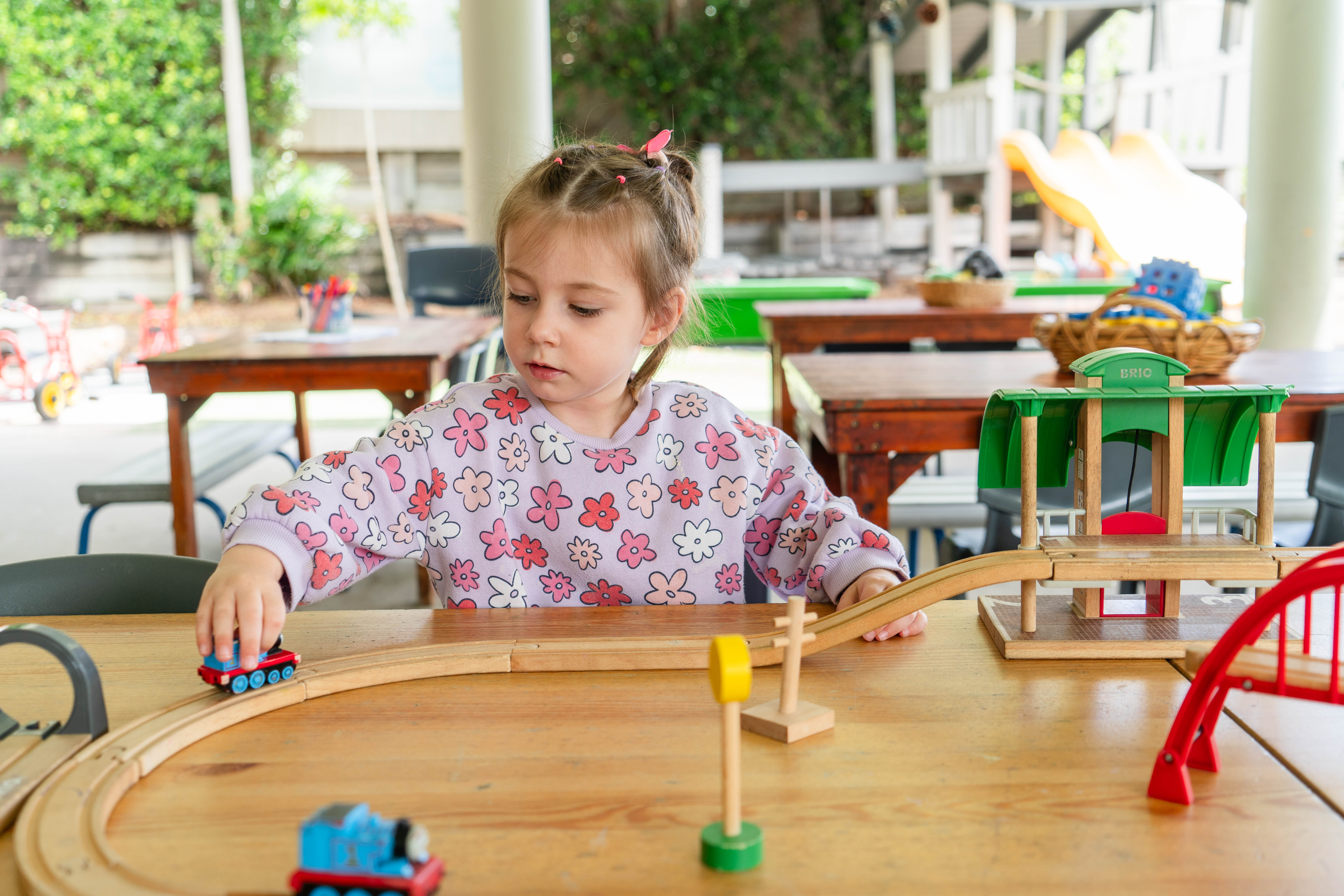
Children thrive on knowing what comes next. A consistent daily schedule creates a sense of security that helps your child feel safe and ready to learn and play.
Morning Arrival and Learning Block
The morning drop-off sets the tone for your child’s day. Aim to arrive at the same time each day, which helps your child predict what’s coming. A quick, loving goodbye ritual works best – perhaps a special hug, high-five, or phrase that signals it’s time for you to leave.
Once settled, children typically engage in free play followed by group time. This balance of self-directed and structured activities helps them ease into the day. During this morning block, educators observe children’s interests and build on them through thoughtful interactions.
Outdoor play usually happens during the morning when children have fresh energy. Physical activity helps reduce anxiety and promotes healthy development across all domains. The Australian Education Research Organisation highlights that quality outdoor experiences are essential components of early childhood programs.
Morning tea provides not just nutrition but a valuable social learning opportunity. Children practice table manners, conversation skills, and independence as they serve themselves and clean up afterward.
Midday and Afternoon Activities
Lunch and rest time form the core of the midday routine. Children gather to eat meals together, building community and social skills. After lunch, a rest period gives children’s bodies and minds time to recharge, whether they sleep or engage in quiet activities.
The afternoon brings a mix of indoor and outdoor experiences. Educators often plan small group activities based on children’s developing interests. These focused sessions build on morning discoveries and deepen learning.
Late afternoon transitions to more flexible play as children are picked up at different times. This period often includes stories, music, and creative activities that can be enjoyed by changing group sizes.
Consistent end-of-day routines help children prepare for going home. Gathering belongings, reflecting on the day, and saying goodbye to friends creates closure. These predictable steps help children make the mental shift from childcare back to family time.
The Queensland Government’s child safety reforms emphasise that predictable routines are not just about scheduling – they’re fundamental to creating the safe, nurturing environments where children can thrive.
Supporting Your Child’s Emotional Well-being

Your steady presence and responsive care make all the difference during transition times. When you show confidence in your child’s ability to adjust, you help them build resilience.
At Drop-Off Time
Keep goodbyes brief but loving. Long, drawn-out farewells often make separation harder for both of you. A quick hug, kiss, and clear statement about when you’ll return gives your child the security they need.
Partner with educators during the handover. When you arrive, take a moment to help your child settle into an activity before saying goodbye. This gives them a purpose and connection right away.
Be honest about leaving. Sneaking away while your child is distracted might seem easier, but it can damage trust. Always say goodbye, even if it triggers tears. Children need to know they can count on your word.
Stay calm if your child becomes upset. Their big feelings are normal, and most children settle within minutes of your departure. Ask educators to send you a quick message or photo once your child has calmed down – this reassurance helps you both.
Trust the process and the professionals caring for your child. They have extensive experience helping children through transitions and will call you if your child remains distressed for an extended period.
At Home
Create space for connection after pickup. Your child has worked hard all day to follow rules, share, and manage their emotions in a group setting. They need your full attention when reunited, even if just for 15 minutes of uninterrupted time together.
Keep evenings predictable during the adjustment period. Familiar dinner, bath, and bedtime routines provide comfort after a day of stimulation. Consider moving bedtime earlier temporarily if your child seems especially tired.
Listen more than you talk when discussing their day. Open-ended questions like “What made you smile today?” work better than “Did you have a good day?” which might get only a yes or no response.
Watch for signs of stress that might need extra support. Changes in sleep, persistent clinginess beyond two weeks, regression in toileting, or unusual aggression might signal that your child needs additional help adjusting. The Web of Hope resource centre offers guidance for parents navigating challenging transitions.
Remember that your relationship is your child’s safe harbour. When they test limits or have meltdowns at home after childcare, it often means they feel secure enough with you to release the emotions they’ve managed all day. Your loving response helps them process these feelings and reset.
By understanding your child’s experience, maintaining consistent routines, and providing emotional support, you create the foundation for a successful return to childcare. This thoughtful approach helps your child build confidence, independence, and a love of learning that will benefit them throughout life.